Addison Industries LTD
"Waterfall" Series 2 radios
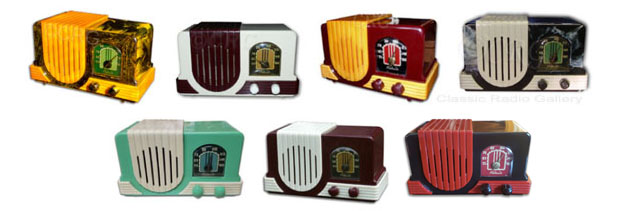
From Canada's Addison Industries LTD of Toronto,
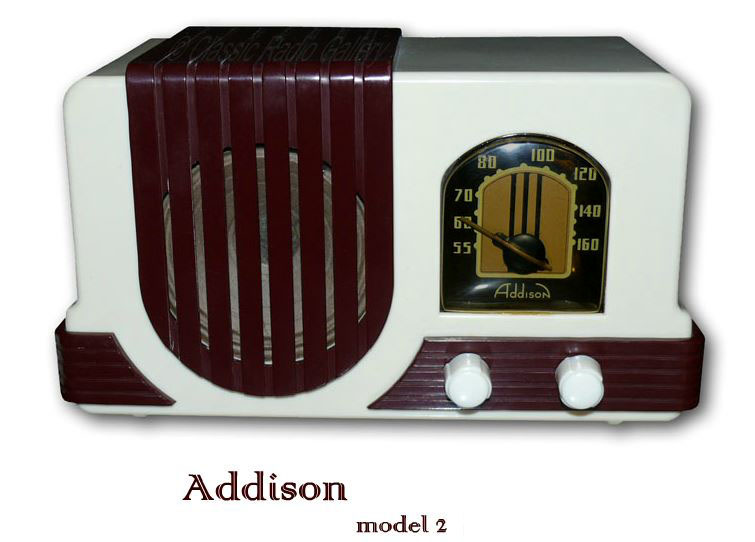
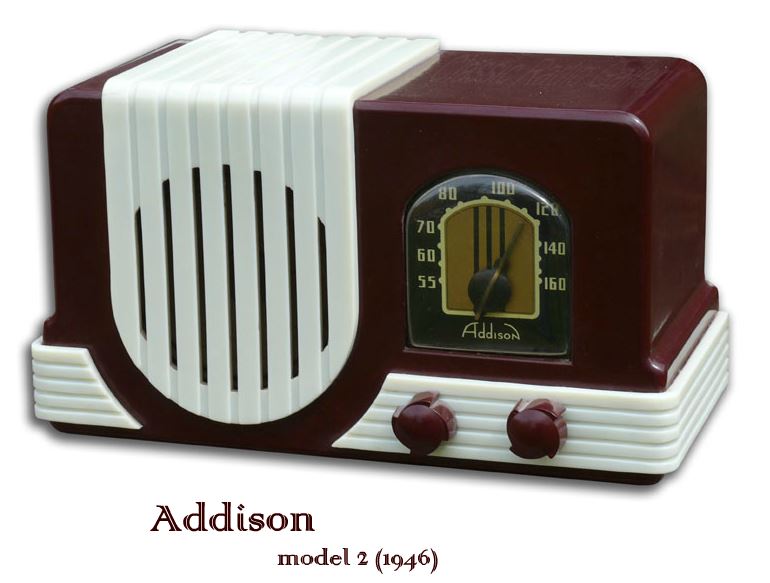
this is the beautiful Addison model 2 series radio.
An uncredited Canadian radio designer sure deserves an award for this masterpiece!
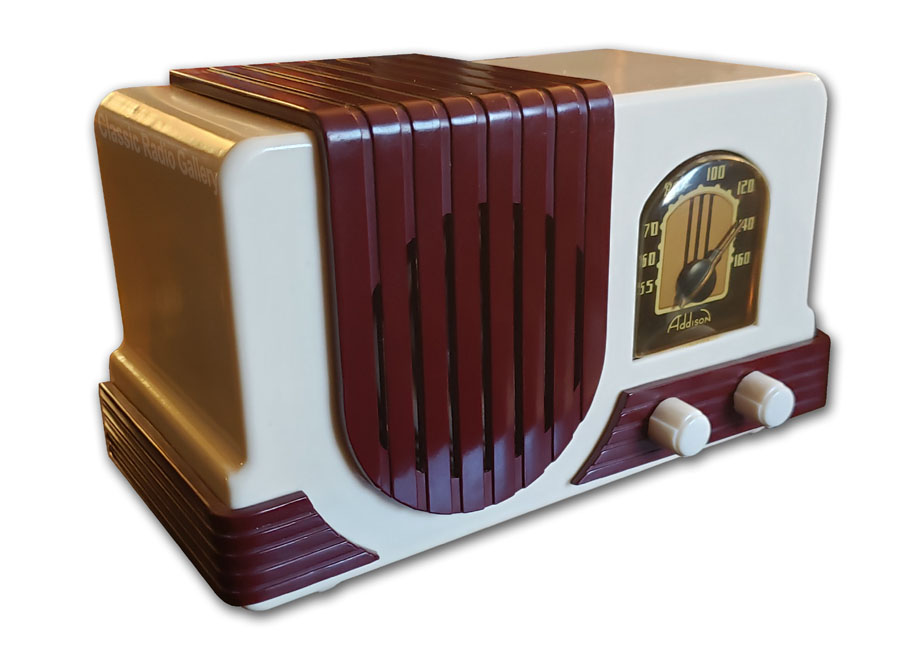
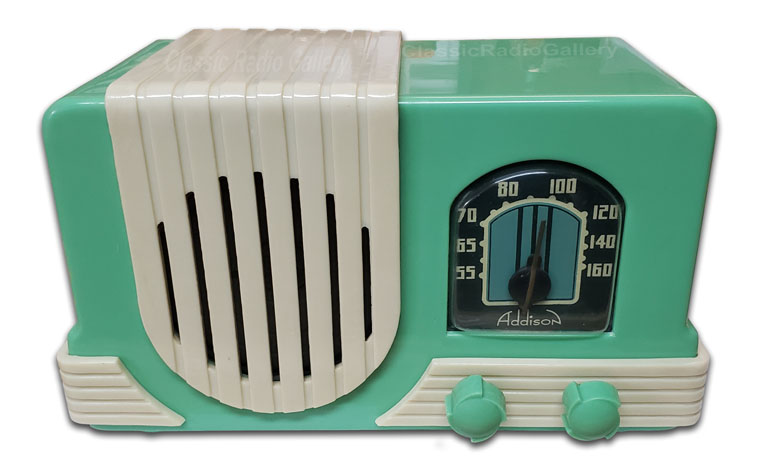
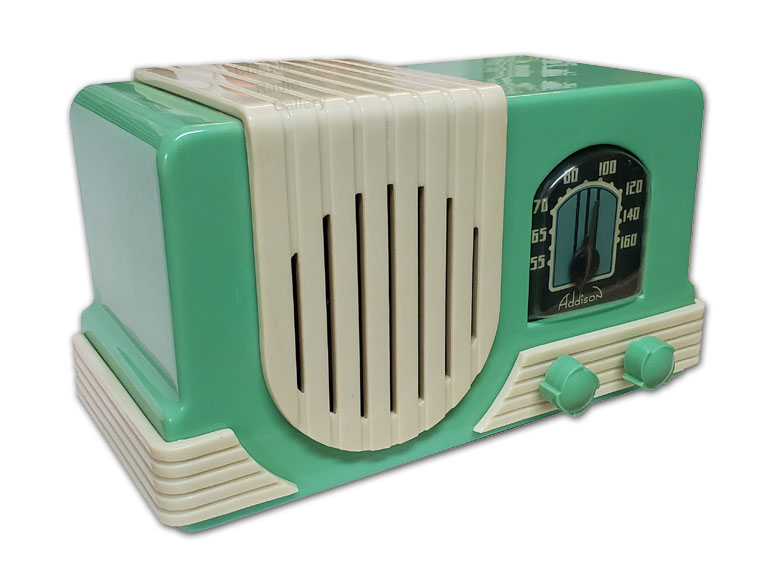
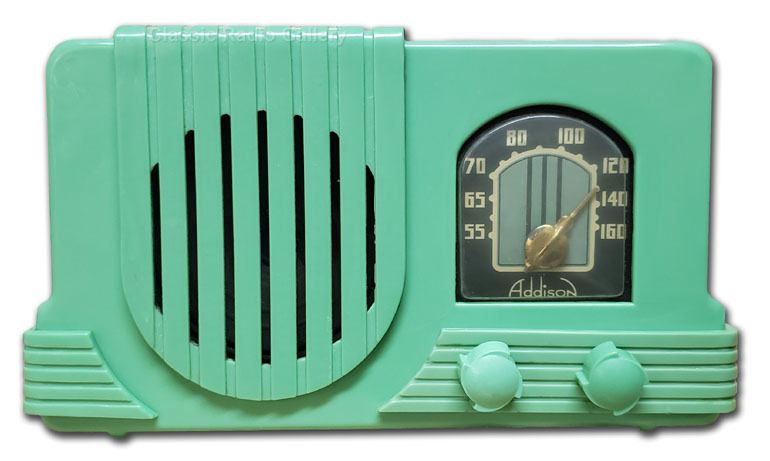
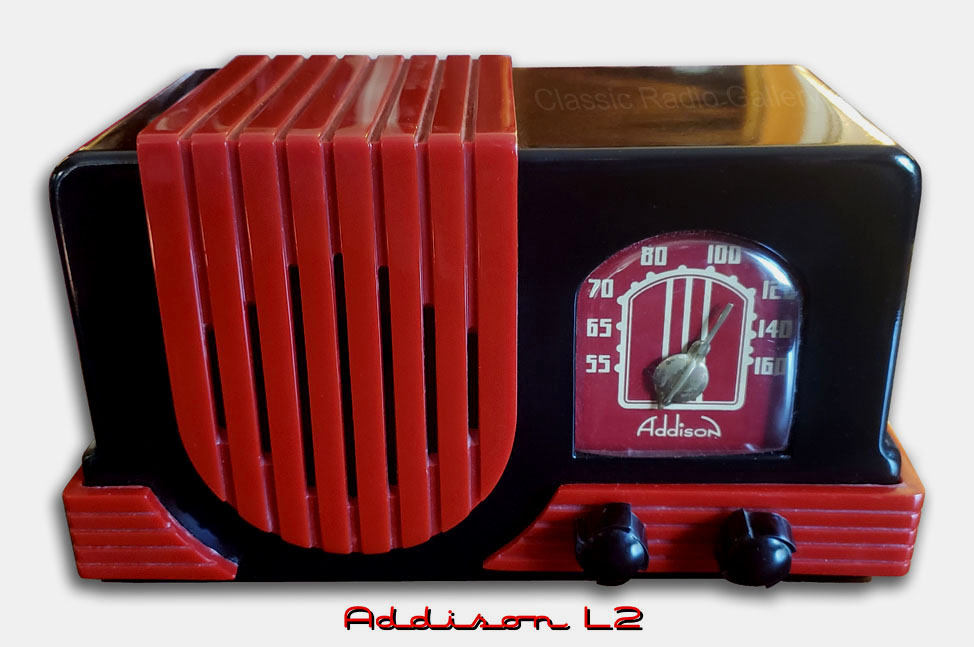
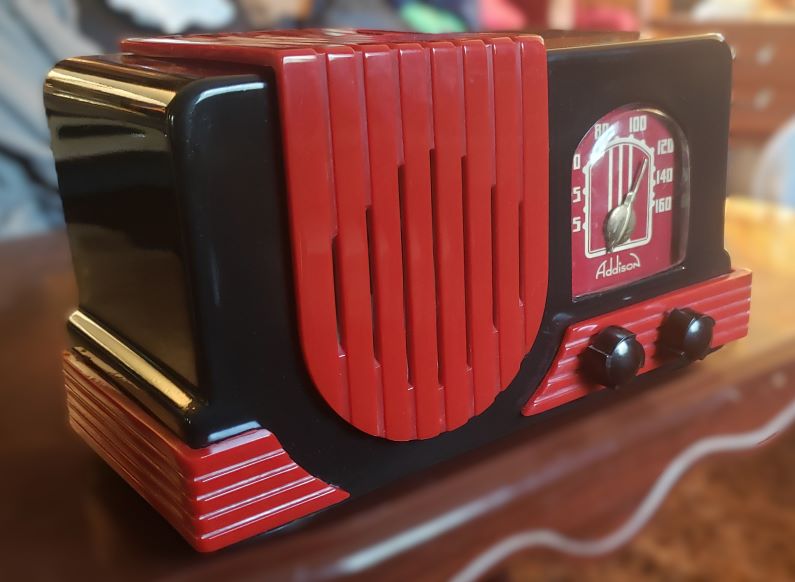
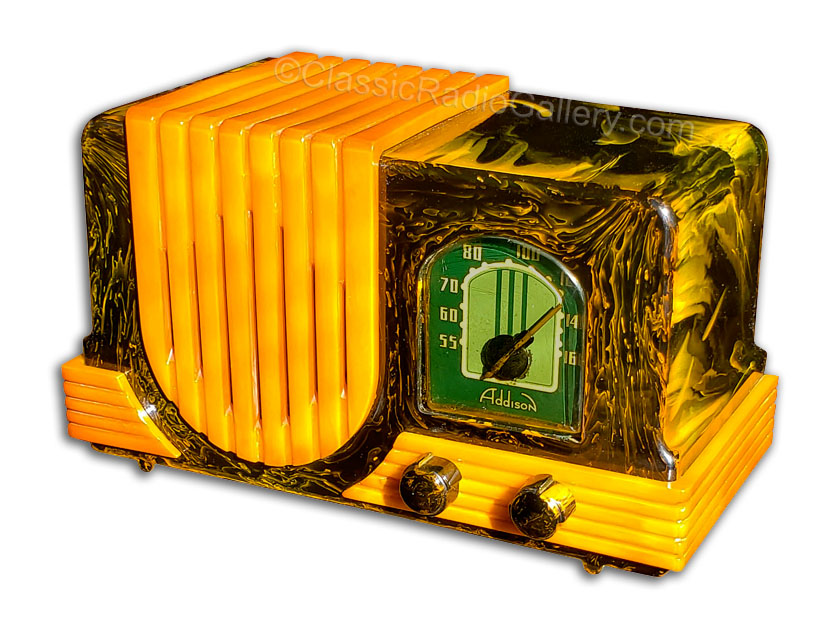
It is often referred to as the Addison "Waterfall" for the speaker grille design.
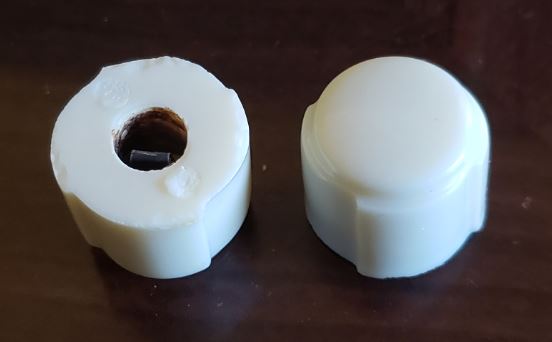
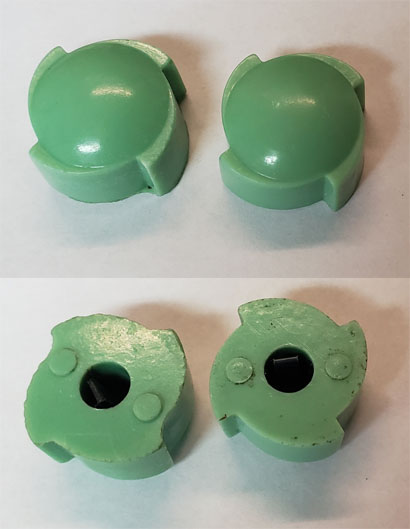
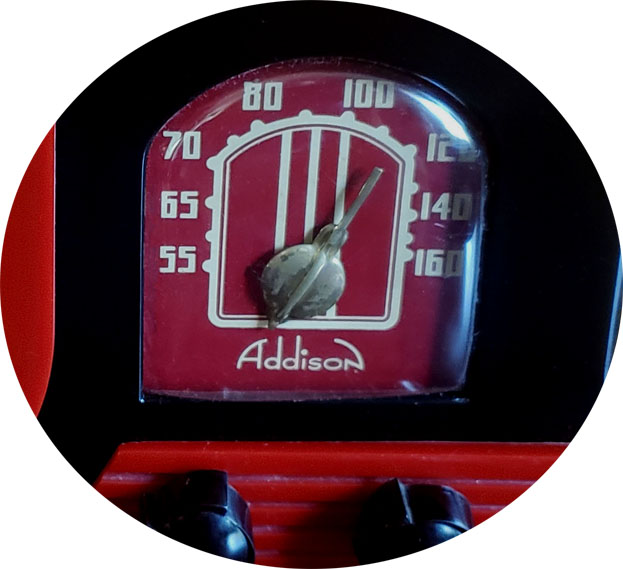
The cabinet, contrasting dial, matching pinwheel knobs and
wrap-around bumper trim pieces are all perfectly proportioned.
It has to be included as one of the world's greatest vintage radio designs ever.
It is a fairly small radio measuring 10.5 x 6 x 5 inches.
Addison offered many color combinations using various materials for the model 2 series;
Catalin, Plaskon, Beetle, Bakelite and enameled (painted) cabinets.
( See the "Radio Plastics Explained" page)
Like the pinwheel knobs, the dial scales also came in many different
colors to match or contrast the cabinet colors.
Another website suggests that any painted series 2 Addisons are not original,
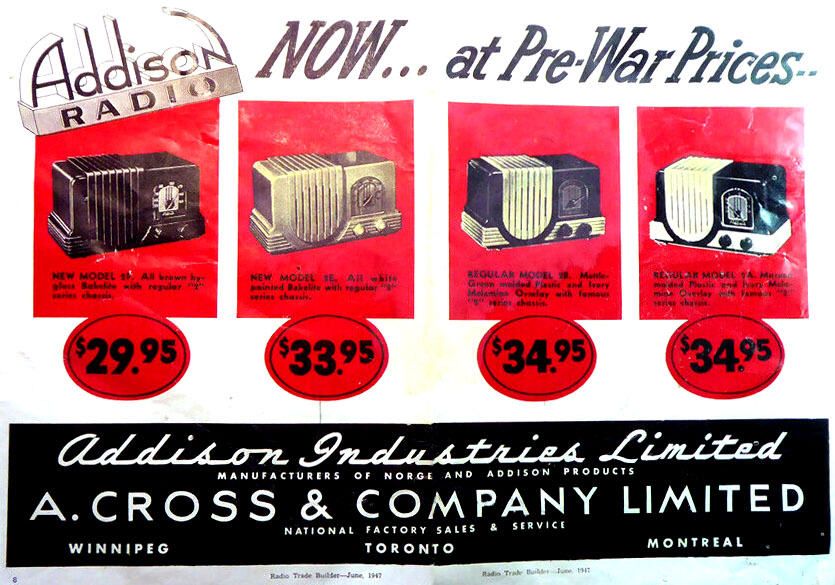
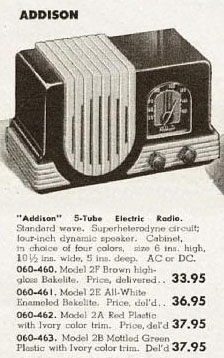
yet the ads below confirm factory-painted cabinets were offered.
Close examination for an after market painted cabinet can generally be confirmed by residual clues
as flawless factory-enameled finishes are near impossible to recreate.
The Addison series 2 "Waterfalls" have been found with 3 chassis variations;
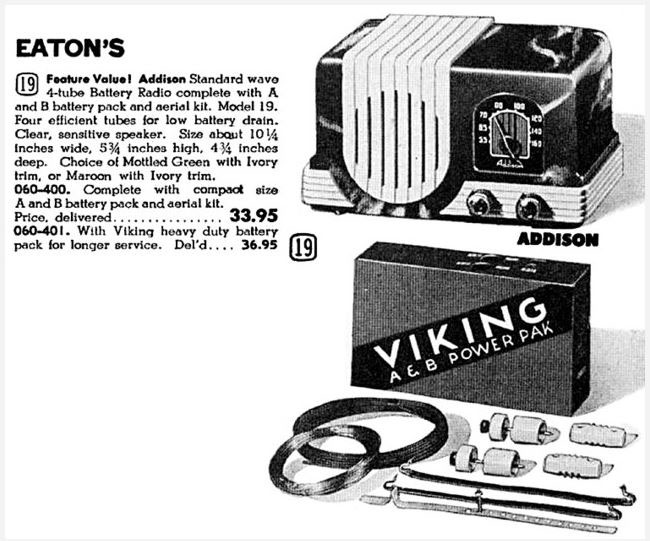
A battery version chassis model 19 (no back cover),
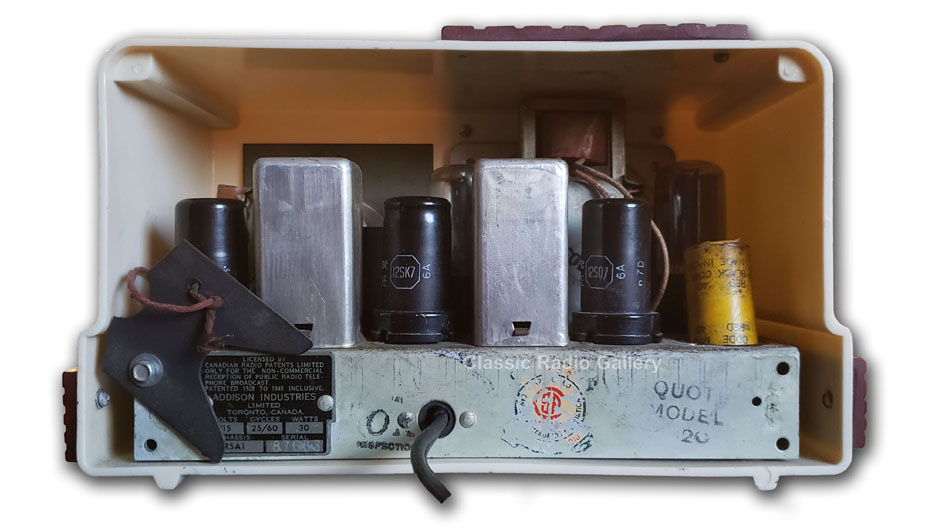
the R5A1 chassis (no back cover)
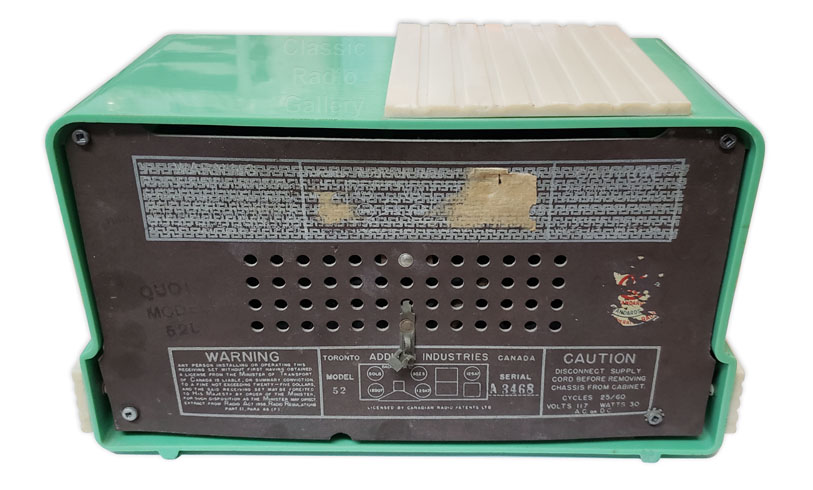
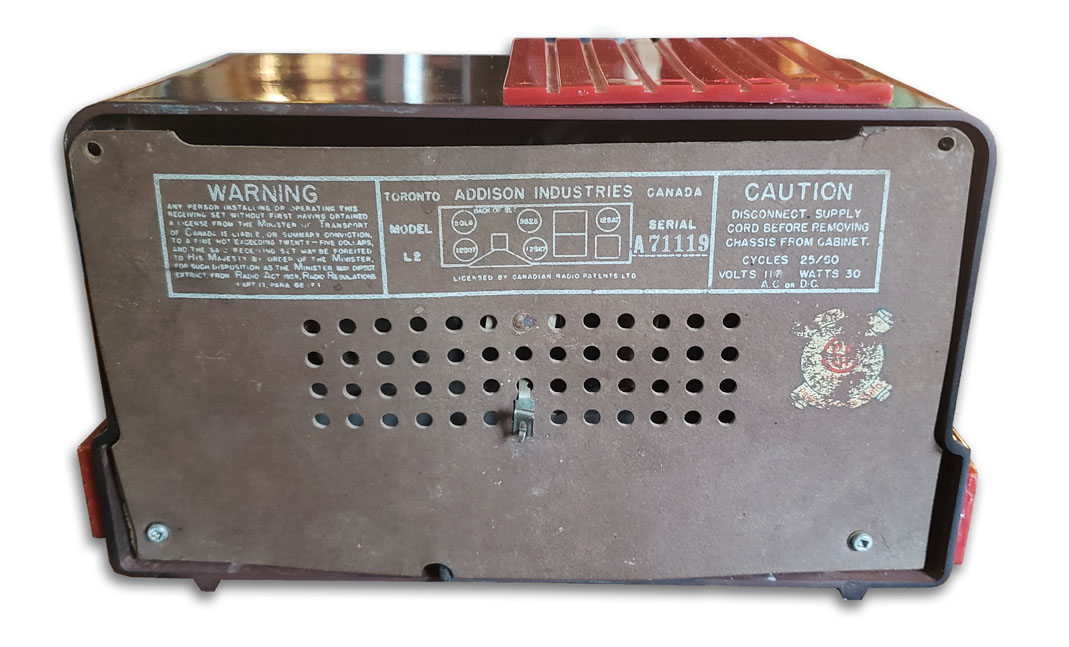
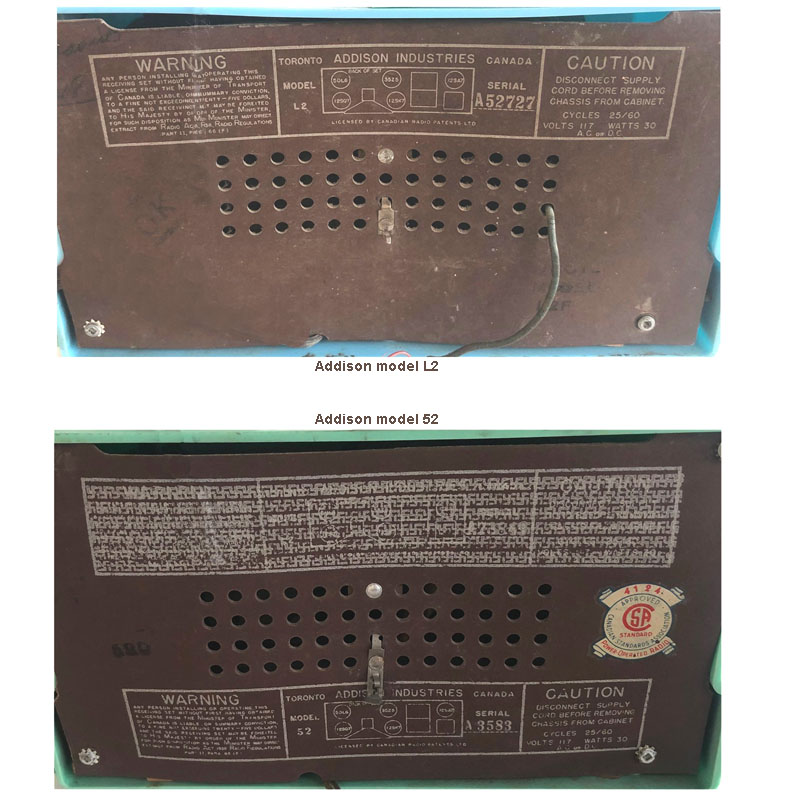
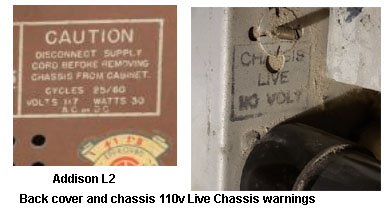
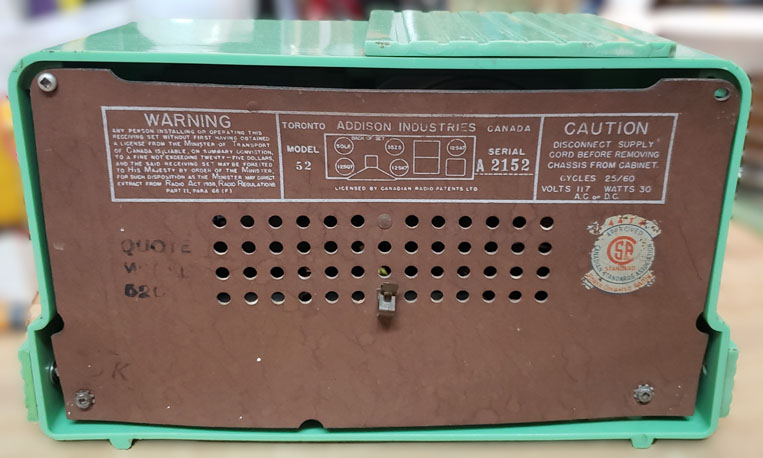
The L2 & 52 chassis (with back cardboard cover due to 120v live chassis designs)
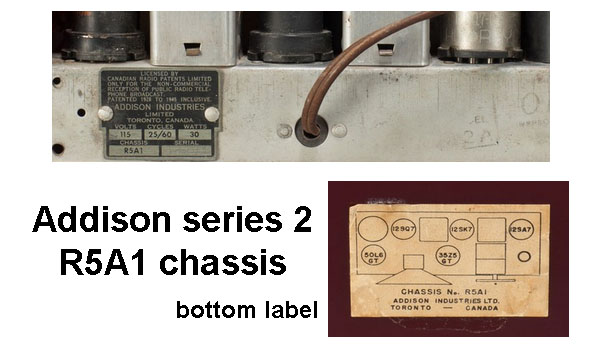
On the R5A1 chassis, a rivoted metal tag included the serial number, voltage ratings and chassis number.
Model numbers were rubber stamped onto the chassis which are commonly faded and illegible.
The different model numbers were used to designate different cabinet color,
Addison R5A1 chassis radios include models
2A, 2B, 2C, 2F, A2A, A2B, A2C, B2A, B2B, B2C and B2F.
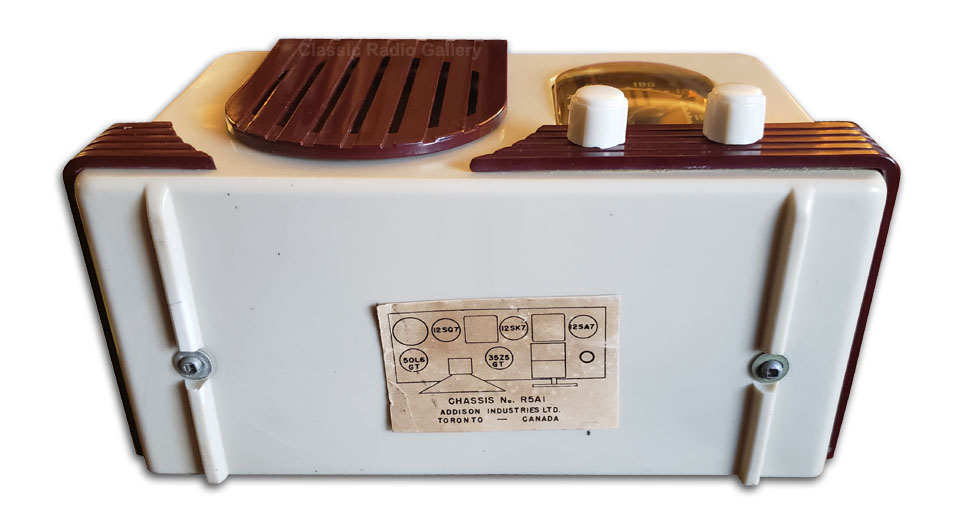
Models using the R5A1 chassis did not include a back cover,
and had a small paper chassis diagram glued to the bottom of the cabinet.
The model L2 & 52 used a different AC-DC chassis and included a back cover on the radio to
protect the owner from shocks because of the live chassis design.
The model number and a chassis diagram was printed on the back cover.
"Chassis Live - 110volt" warnings are rubber stamped on the L2 chassis.
A model 52 was also issued, using a chassis similar to the L2 and some used
edited L2 back covers, X-ing out L2 references and adding model 52 labeling
suggesting it was possibly the last of the Addison "Waterfalls" issued.
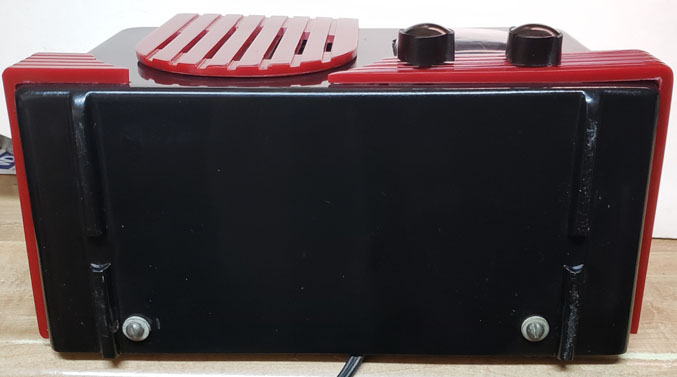
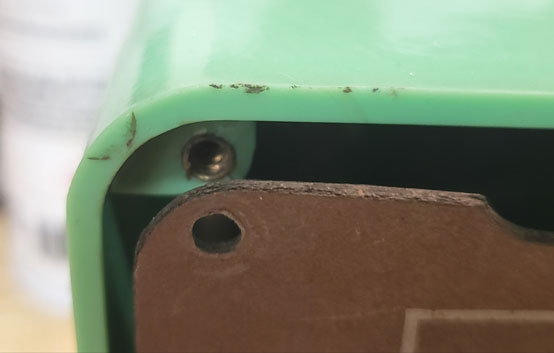
Both the L2 and 52 cabinets include top rear threaded corner screw holes to
help secure the now included back cover.
(the ch.R5A1 radio cabinets do not have screw holes in the back corners)
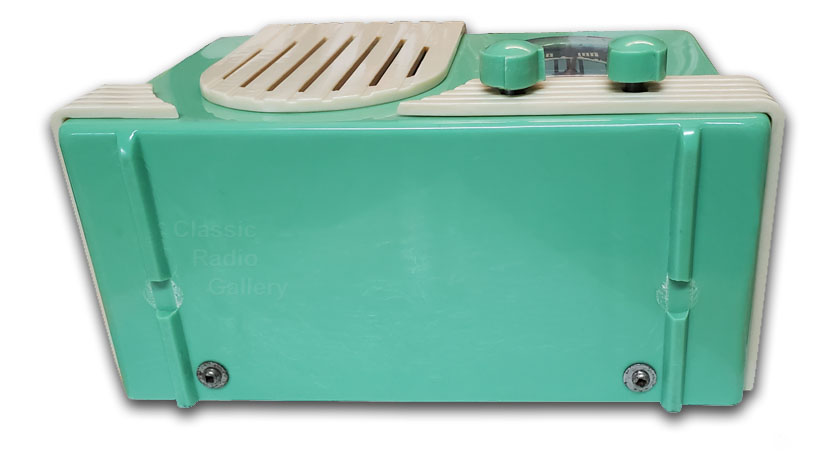
Another difference in the cabinets are the bottom chassis securing holes;
the R5A1 cabinets have centered bottom holes to secure the chassis and
the L2/52 cabinets only have bottom rear-positioned holes.
These rear holes were positioned under wood spacer blocks attached to the
backs of the chassis which isolated the bottom securing screws from the 120volt live chassis.
The L2 service page below shows the wood spacers.
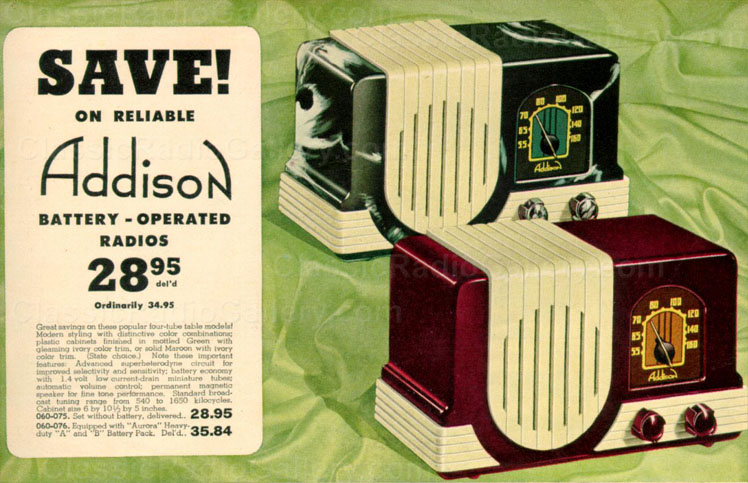
And finally, still considered a "series 2" was a battery version option, the model 19.
Service documentation for the R5A1 is dated 1946-1947 and
the model L2 and 19 are dated 1947-1948.
No service data was found for the model 52.
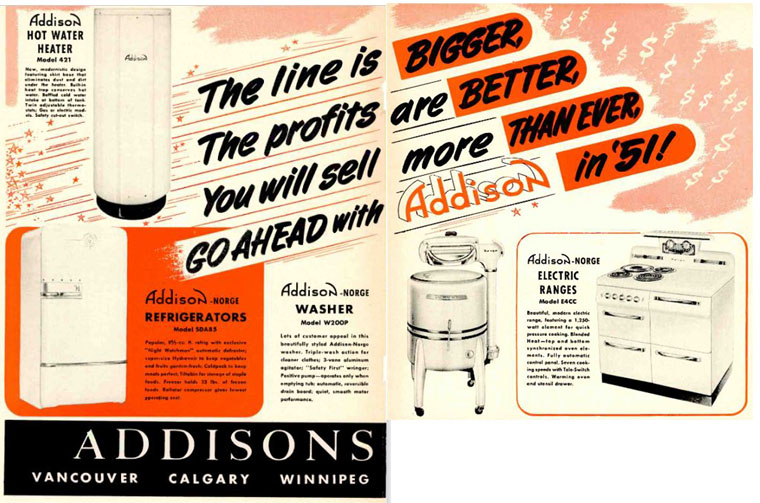
Addison Industries sold many other household appliances as well as radios,
as the advertisement at the bottom of the page shows.
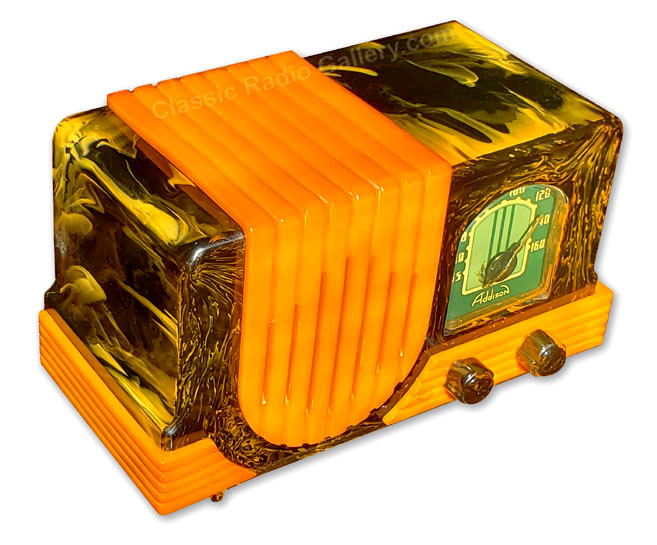
The sunlight really highlights the extreme swirls in this catalin cabinet.
Marbling can range from subtle to dramatic, making every example unique.
Other Catalin versions include an alabaster body with red, raspberry or burgundy trim,
and another with a burgundy body and alabaster trim.
Alabaster catalin ages into nice golden butterscotch hues.
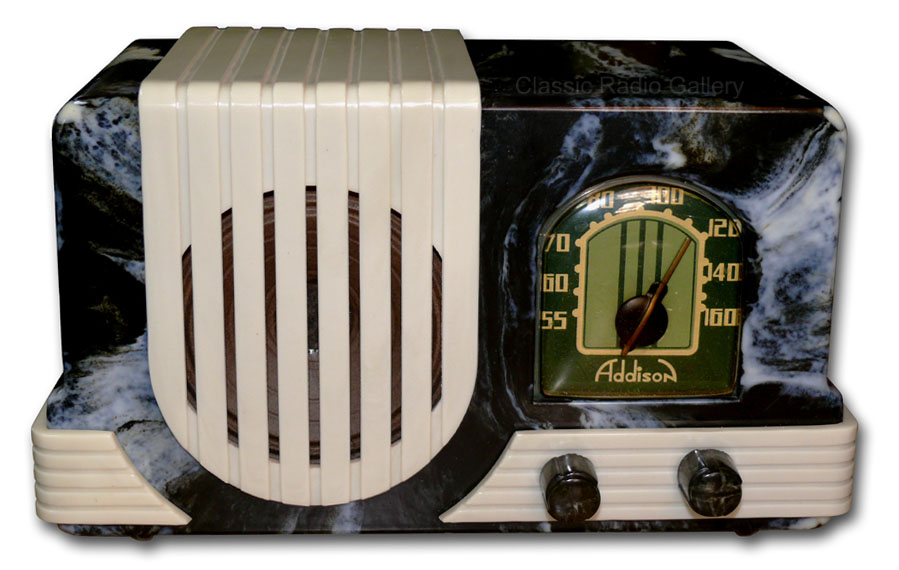
This version was advertised as "mottled green" with ivory trim as seen in the ad below.
If you look very, very close, you can see a hint of very dark green,
but they definitely look more black and white.
Both the body and trim are plaskon.
Each example is unique with the different swirl patterns created,
many with dramatic marbling and others, more subtle.
All Addison 2 models are very sought after due to their fabulous design,
and this "black & white" version is one of the more desired.
Here are a couple more examples with similar marbling flare around the dial.
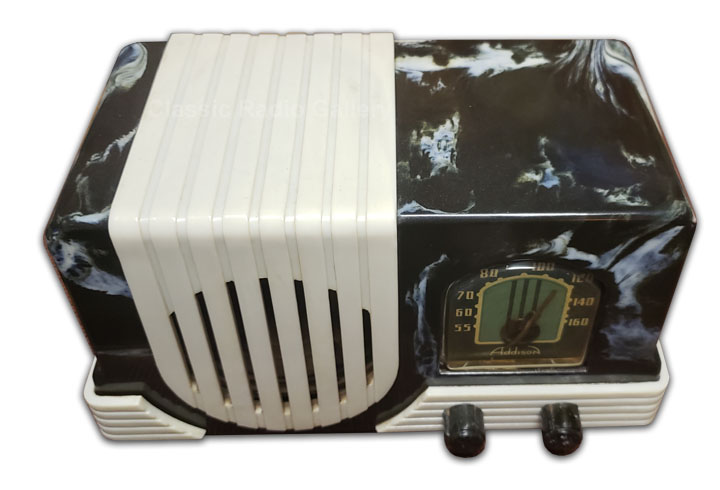
Click on the radio below to listen to the introduction to "Superman" (double-click to pause/stop)
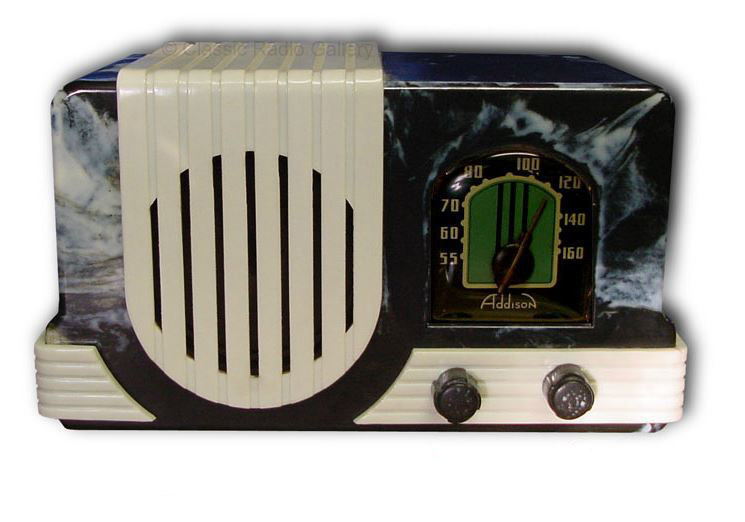
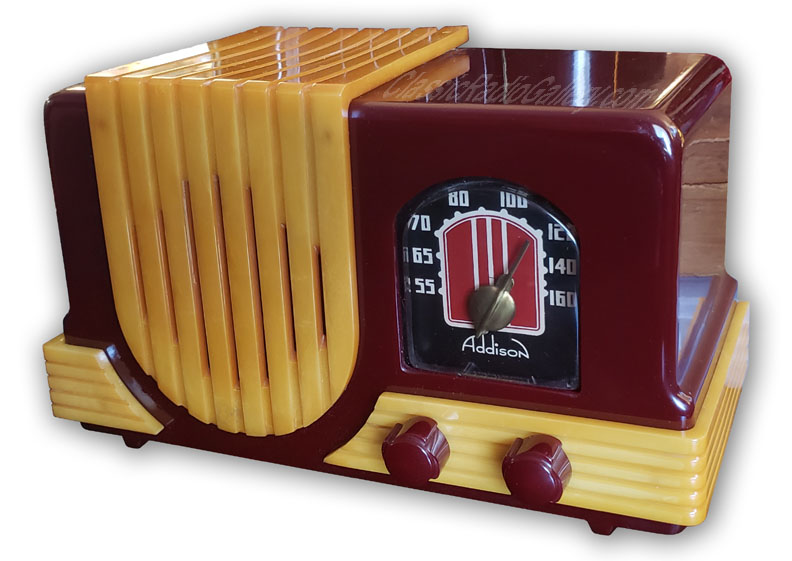
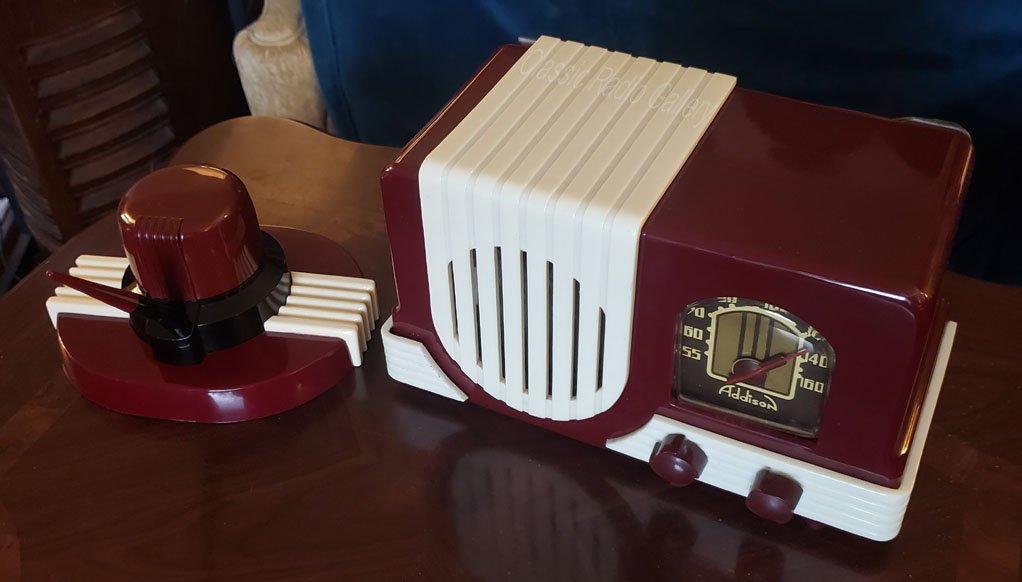
This is the burgundy and alabaster catalin version of the Addison model 2 "Waterfall".
Alabaster catalin ages into a nice golden hue over the years.
A plaskon version of this color combination was also made,
easy to tell the difference because plaskon trim stays white and never changes color.
This red & black dial is not found often with Addison 2 examples.
Other catalin versions include an alabaster body with red, raspberry or burgundy trim,
and another with a dark green with alabaster marbling and alabaster trim.
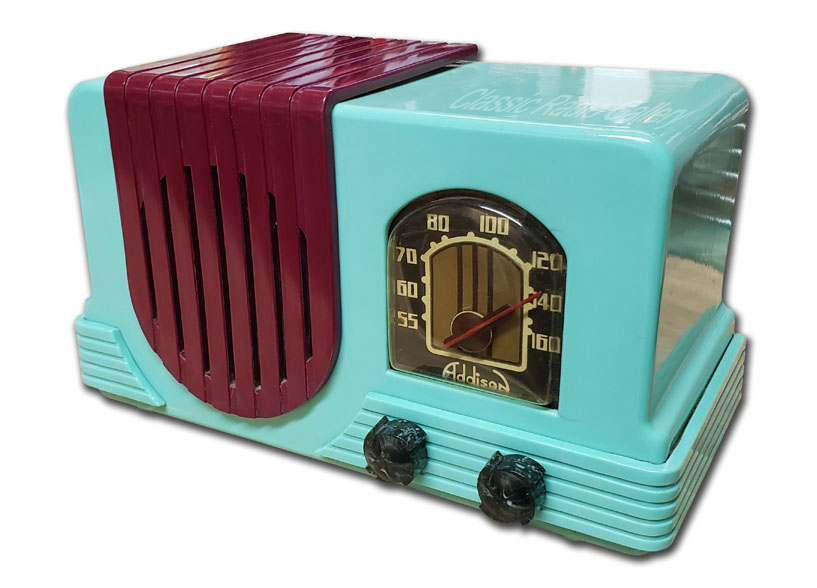
This white plaskon cabinet version below is one of the harder Addison 2 color combinations to find,
nicely contrasted with burgundy plaskon trim.
The 1947 advertisement below shows it was also available with white painted cabinets.